
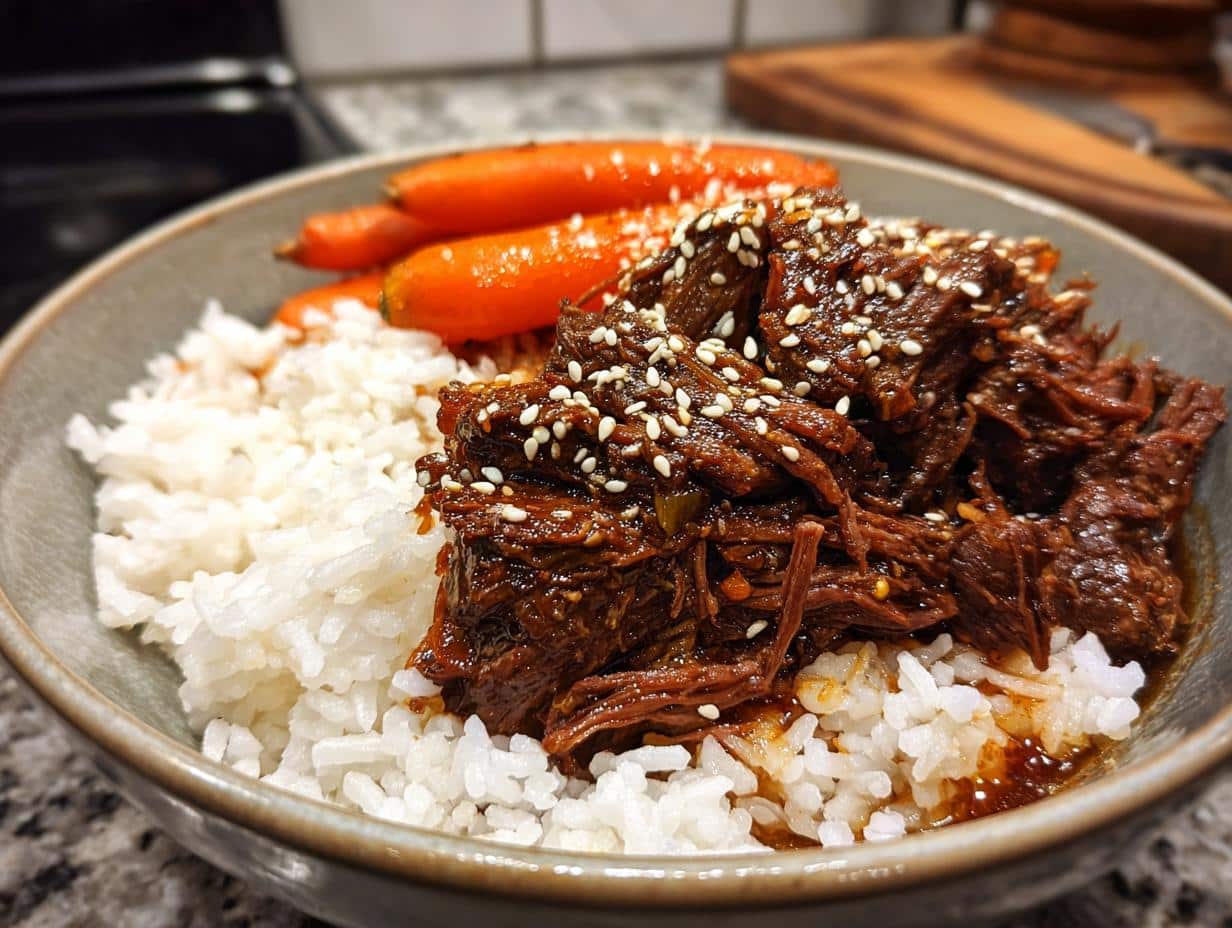
I still remember the first time I tried this Korean-style pot roast at my friend Ji-hye’s house—her mom served it steaming hot, the beef so tender it practically melted on my tongue. That rich, savory-sweet sauce with just the right kick of spice had me hooked instantly. Now, after years of testing (and eating!), I’ve perfected my own version. This recipe delivers that same fall-apart tenderness and bold Korean flavors, but with simple ingredients you can find at any grocery store. Trust me, one bite and you’ll understand why this dish has become my go-to for cozy dinners and special occasions alike.
Why You’ll Love This Korean-Style Pot Roast
This isn’t just any pot roast—it’s a flavor explosion that’ll have you licking your plate. Here’s why it’s a total game-changer:
- Tender, melt-in-your-mouth beef: Slow-cooked until it practically shreds itself with a fork (no knife required!).
- Bold Korean flavors: That perfect balance of sweet, savory, and spicy—thanks to gochujang, soy sauce, and sesame oil.
- Effortless prep: Sear, simmer, and forget. Even the busiest weeknights can handle this one.
- Crazy versatile: Serve it over rice, stuff it into tacos, or just eat it straight from the pot (no judgment here).
Seriously, this dish is like a cozy hug with a kick—it’s comfort food upgraded.
Korean-Style Pot Roast Ingredients
Here’s everything you’ll need to make this flavor-packed roast. I’ve grouped them so you can prep efficiently—trust me, the extra few minutes spent prepping makes all the difference when you’re hungry and that amazing smell fills your kitchen!
The Beef
- 3 lbs beef chuck roast: Look for good marbling—that fat equals flavor! (Sub: brisket works too, but chuck is my go-to for tenderness)
- Kosher salt & black pepper: For that essential first layer of seasoning
The Sauce (aka Liquid Gold)
- 1 cup soy sauce: Use regular or low-sodium (Sub: tamari for gluten-free)
- 1/2 cup packed dark brown sugar: The molasses notes deepen the flavor (Sub: honey or maple syrup in a pinch)
- 1 tbsp gochujang: Start with this amount—you can add more later if you want more heat!
- 2 tbsp sesame oil: The toasty fragrance is non-negotiable
- 4 cloves garlic, minced: Fresh only—no jarred stuff here!
- 1 tbsp fresh ginger, grated: Pro tip: Keep ginger root in the freezer for easy grating
The Veggies
- 1 large yellow onion, sliced: They’ll melt into sweet perfection
- 2 carrots, chopped into 1-inch chunks: No need to peel—just scrub well
- 2 cups beef broth: Homemade if you have it, but store-bought works fine (Sub: water in emergencies, but broth adds depth)
Quick note: I know gochujang might be new for some of you—find it in the Asian aisle of most supermarkets these days. That little red tub lasts forever in the fridge and makes everything taste better!
Equipment You’ll Need for Korean-Style Pot Roast
Don’t worry—you won’t need any fancy gadgets for this! Just grab these basics (I bet you already have most of them):
- Heavy pot or Dutch oven: Essential for that perfect sear and even simmering (Sub: slow cooker if you want hands-off cooking)
- Tongs: For flipping that gorgeous hunk of beef without losing precious crust
- Measuring cups & spoons: Precision matters with those bold Korean flavors!
- Wooden spoon: To scrape up all those tasty browned bits after searing
- Chef’s knife & cutting board: For prepping garlic, ginger, and veggies
That’s it! Now let’s get cooking.
How to Make Korean-Style Pot Roast
Okay, let’s get to the good part—turning that gorgeous hunk of beef into something magical. Follow these steps carefully, and I promise you’ll be rewarded with the most tender, flavorful pot roast you’ve ever tasted. Don’t rush the process—good things come to those who wait (especially when it comes to meltingly soft beef)!
Step 1: Sear the Beef
First things first: pat that beef dry with paper towels—this is your golden ticket to a perfect crust. Season generously with salt and pepper on all sides. Now, heat your sesame oil in that heavy pot over medium-high heat until it shimmers. Carefully add the beef (listen for that glorious sizzle!) and don’t touch it for 2-3 minutes per side. You want a deep brown crust—that’s where the flavor lives!
Watch out: If your pot’s too small, sear in batches. Crowding leads to steaming instead of browning, and we didn’t come this far for sad, gray meat!

Step 2: Sauté Aromatics
Once that beef is beautifully seared, remove it temporarily (those juices will come back into play soon, don’t worry!). Lower the heat to medium and toss in your sliced onions—they’ll soften in about 3 minutes. Now add the garlic and ginger, stirring constantly for just 30 seconds until fragrant. Any longer and they’ll burn, turning bitter instead of sweet and aromatic.
This is when your kitchen will start smelling insanely good. My neighbors always know when I’m making this recipe—the scent of toasting garlic and ginger drifts right out the window!
Step 3: Simmer to Perfection
Return the beef to the pot and pour in your sauce mixture (soy sauce, brown sugar, gochujang) plus the beef broth. Scrape up any browned bits from the bottom—that’s pure flavor gold! Nestle in the carrots, bring everything to a brief boil, then immediately reduce to the lowest simmer. Cover tightly and let it work its magic for 3 hours.
Pro tip: Resist the urge to peek! Every lift of the lid adds 10 minutes to your cook time. If you’re using a slow cooker, set it on low for 8 hours—wake up to meat that falls apart at the slightest nudge.
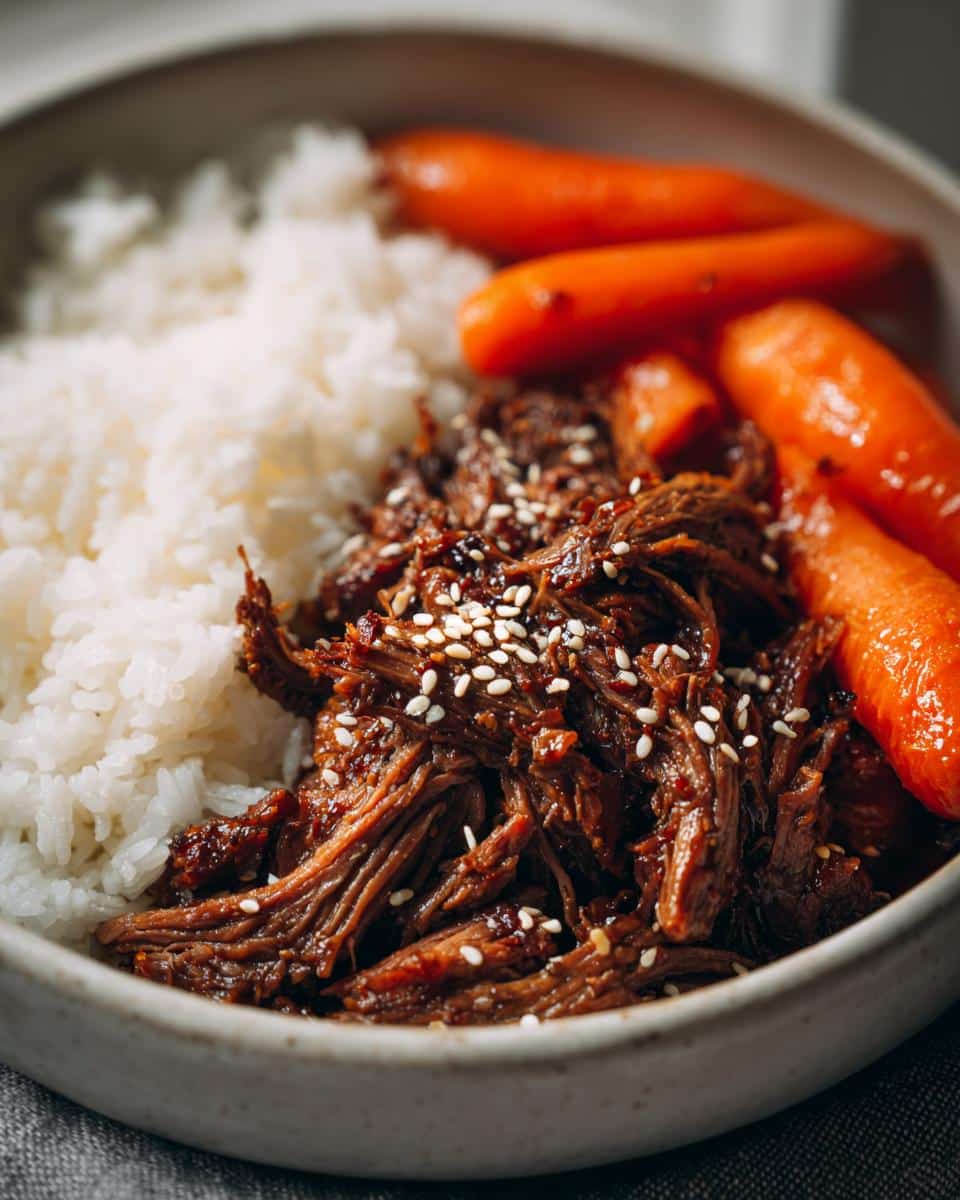
You’ll know it’s done when the beef shreds effortlessly with two forks. Taste and adjust seasoning—sometimes I add an extra teaspoon of gochujang if I want more heat!
Tips for the Best Korean-Style Pot Roast
After making this dish dozens of times (and taste-testing every single batch—tough job, I know!), I’ve picked up some game-changing tricks:
- Scrape that pot like your life depends on it: After searing, deglaze with a splash of broth to lift all those caramelized bits—they’re packed with flavor you don’t want to waste!
- Skim the fat with confidence: After cooking, I use a spoon to skim off excess fat from the sauce. It keeps things rich but not greasy.
- Gochujang is your spice dial: Start with 1 tablespoon, then add more at the end if you want more heat. My husband likes it fiery, so I stir in an extra teaspoon just before serving.
- Let it rest before shredding: Giving the meat 10 minutes off heat makes it juicier when you pull it apart. Patience pays off!
These little tweaks take this dish from “pretty good” to “where has this been all my life?” territory.
Serving Suggestions for Korean-Style Pot Roast
This pot roast begs to be the star of a Korean-inspired feast! Here’s how I love to serve it:
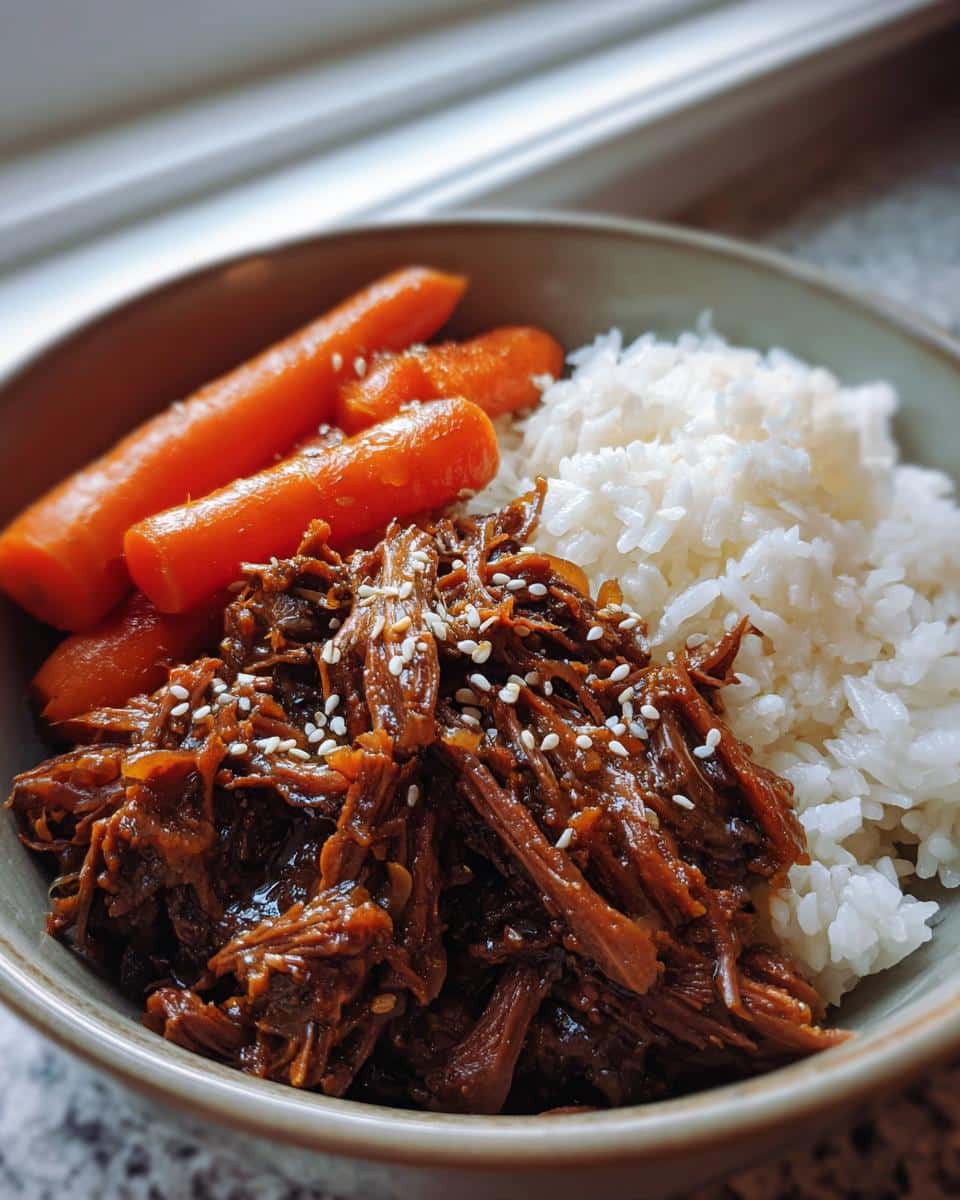
- Steamed jasmine rice: The perfect sponge for that luscious sauce (I always make extra—trust me)
- Kimchi: For that crunchy, tangy contrast that cuts through the richness
- Quick-pickled veggies: Radishes or cucumbers add bright freshness
- Soft lettuce leaves: For messy, delicious wraps (my kids go wild for these!)
Don’t forget the extra sauce for drizzling—this stuff is liquid gold!
Storing and Reheating Korean-Style Pot Roast
Here’s the beautiful thing about this pot roast—it tastes even better the next day as those flavors really get to know each other! But you’ll want to store it right to keep that magical tenderness intact.
First, let it cool slightly (about 20 minutes) before transferring to an airtight container. I’m obsessed with glass containers for this—they don’t absorb smells, and you can see that gorgeous sauce at a glance. The beef and sauce will keep happily in the fridge for 3 days max, though in my house it never lasts that long!
When reheating, gentleness is key. My favorite method? Pour everything into a saucepan with a splash of water or broth to loosen things up, then warm it over low heat, stirring occasionally. Microwave works in a pinch—just cover with a damp paper towel and use 50% power in 30-second bursts to prevent rubbery meat.
Pro tip: If you’ve got leftovers headed for the freezer (it keeps beautifully for 3 months), portion it out first—that way you can thaw just what you need. Thaw overnight in the fridge, then reheat gently with extra liquid. The carrots might get softer, but that beef? Still perfection!
Korean-Style Pot Roast FAQs
I get asked these questions all the time when friends try this recipe—here are my hard-earned answers after years of tweaking and tasting!
Can I use a different cut of beef?
Absolutely! While chuck roast is my go-to (all that marbling makes it perfect for slow cooking), brisket works great too. Just avoid super-lean cuts—you need that fat to keep things moist during the long simmer. Once tried it with bottom round in a pinch… let’s just say I’ll stick to chuck!
How do I make it less spicy?
Easy fix—just reduce the gochujang! Start with 1 teaspoon instead of 1 tablespoon. You can always stir in more at the end if you want more heat. My aunt prefers it mild, so I make hers with just a whisper of gochujang—the soy sauce and brown sugar still give amazing flavor.
Can I freeze leftovers?
Oh honey, this roast was made for freezing! Portion it into airtight containers (I love these 2-cup glass ones) and it’ll keep beautifully for up to 3 months. Thaw overnight in the fridge, then reheat gently with a splash of broth to bring it back to life. The texture holds up shockingly well—my freezer stash has saved many a busy weeknight!
What if I can’t find gochujang?
No panic! Mix 1 tbsp tomato paste with 1/2 tsp chili flakes and 1/2 tsp sugar for a quick substitute. It won’t be exactly the same (that fermented depth is hard to replicate), but it’ll still taste delicious. Though honestly? Buy the gochujang—you’ll use it in everything once you try it!
Can I make this in an Instant Pot?
You bet! After searing, pressure cook on high for 60 minutes with natural release. Comes out just as tender, though I miss the slow-simmered aromas filling the house all afternoon. Pro tip: reduce the broth by 1/2 cup since pressure cookers don’t evaporate liquid like stovetop does.
Nutrition Information
Important note: These are estimates—your actual numbers might vary slightly based on ingredient brands and exact measurements. But here’s the general nutritional scoop per serving (and let’s be real, you might eat two servings because it’s that good):
- Calories: 450
- Protein: 35g (that beef packs a punch!)
- Carbohydrates: 20g
- Sugar: 12g (thanks to that brown sugar magic)
- Fat: 25g
- Saturated Fat: 8g
- Sodium: 1200mg (use low-sodium soy sauce if you’re watching this)
- Fiber: 2g (those carrots do their part)
Not too shabby for a meal that tastes like pure comfort, right? The protein keeps you full, while the balanced flavors mean you won’t crash later. My fitness-nut brother always asks for seconds—that’s how you know it’s legit!
Print
Irresistible 3-Ingredient Korean-Style Pot Roast Magic
- Prep Time: 15 minutes
- Cook Time: 3 hours
- Total Time: 3 hours 15 minutes
- Yield: 6 servings 1x
- Category: Main Course
- Method: Braised
- Cuisine: Korean
- Diet: Halal
Description
A tender and flavorful pot roast with Korean-inspired spices and ingredients.
Ingredients
- 3 lbs beef chuck roast
- 1 cup soy sauce
- 1/2 cup brown sugar
- 4 cloves garlic, minced
- 1 tbsp ginger, grated
- 2 tbsp sesame oil
- 1 onion, sliced
- 2 carrots, chopped
- 2 cups beef broth
- 1 tbsp gochujang (Korean red pepper paste)
Instructions
- Season the beef with salt and pepper.
- Heat sesame oil in a pot over medium-high heat. Sear the beef on all sides.
- Add garlic, ginger, and onion. Cook for 2 minutes.
- Mix soy sauce, brown sugar, and gochujang in a bowl. Pour over the beef.
- Add beef broth, carrots, and bring to a boil.
- Reduce heat to low, cover, and simmer for 3 hours.
- Shred the beef and serve with rice.
Notes
- Use a slow cooker for a more tender result.
- Adjust gochujang to control spiciness.
- Store leftovers in an airtight container for up to 3 days.
Nutrition
- Serving Size: 1 serving
- Calories: 450
- Sugar: 12g
- Sodium: 1200mg
- Fat: 25g
- Saturated Fat: 8g
- Unsaturated Fat: 12g
- Trans Fat: 0g
- Carbohydrates: 20g
- Fiber: 2g
- Protein: 35g
- Cholesterol: 100mg
Keywords: Korean pot roast, beef stew, spicy beef, slow-cooked beef